How to Write a Job Search Resume for a Data Science Position
In today's competitive job market, having a well-crafted resume is crucial for landing a job in data science. A data science resume should effectively showcase your skills, experience, and achievements in a clear and concise manner, setting you apart from other candidates. In this article, we will provide a comprehensive guide on how to write a job search resume for a data science position, including tips and best practices to help you create a standout resume.
The Importance of a Data Science Resume
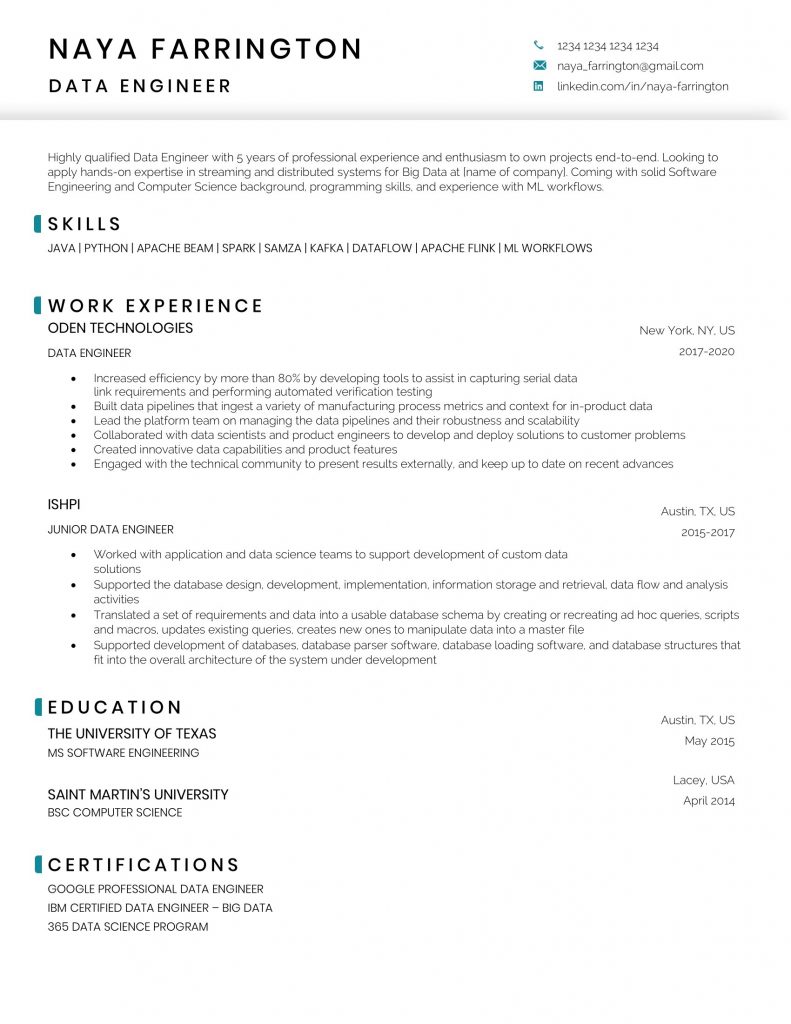
A data science resume is a crucial document that showcases your skills, experience, and achievements in data analysis, machine learning, and other related fields. It serves as a first impression on potential employers, and a well-crafted resume can increase your chances of getting an interview. A good data science resume should include relevant sections, such as education, work experience, skills, and projects, to demonstrate your expertise in data science.
Key Sections to Include in a Data Science Resume
- Summary/Objective Statement: A brief overview of your experience, skills, and career goals in data science.
- Education: Degrees and certifications related to data science, such as a Master's in Data Science or a Ph.D. in Statistics.
- Work Experience: A detailed description of your work experience in data science, including job titles, company names, and achievements.
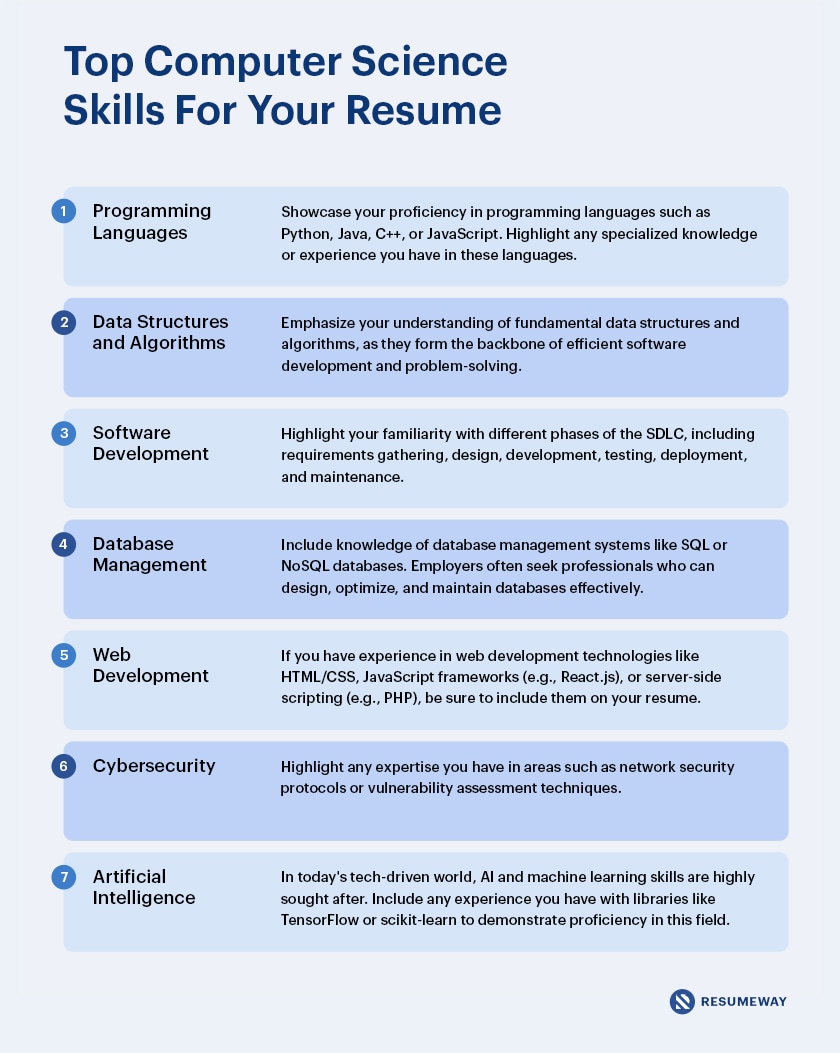
- Skills: A list of relevant skills, such as programming languages (e.g., Python, R, SQL), data analysis tools (e.g., pandas, NumPy, Tableau), and machine learning algorithms (e.g., scikit-learn, TensorFlow).
- Projects: A showcase of your personal or professional projects, including a brief description, methodologies used, and results achieved.
- Awards and Honors: Any notable awards or honors received in data science competitions or conferences.
Best Practices for Writing a Data Science Resume
- Use a clear and concise writing style: Avoid using jargon or technical terms that may confuse non-technical readers.
- Use action verbs: Use action verbs such as "Analyzed," "Developed," "Improved," and "Managed" to describe your achievements.
- Highlight soft skills: In addition to technical skills, highlight soft skills such as communication, teamwork, and problem-solving.
- Use specific metrics: Use specific metrics to quantify your achievements, such as "Increased data processing speed by 30% using parallel processing" or "Reduced error rates by 25% using data quality checks."
- Use a standard font and format: Use a standard font (e.g., Arial, Calibri, or Times New Roman) and format (e.g., bullet points and white space) to make your resume easy to read.
Example of a Data Science Resume
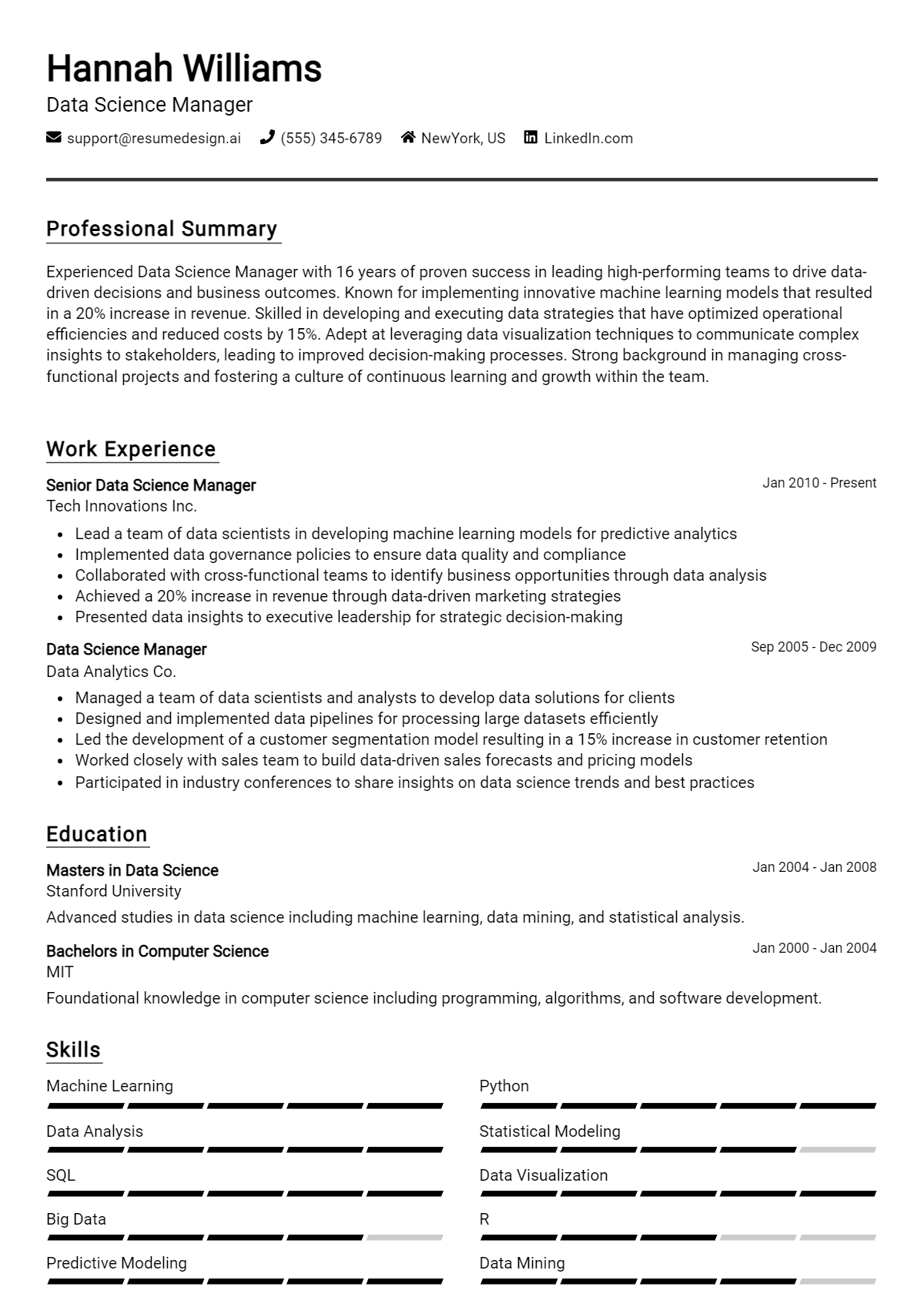
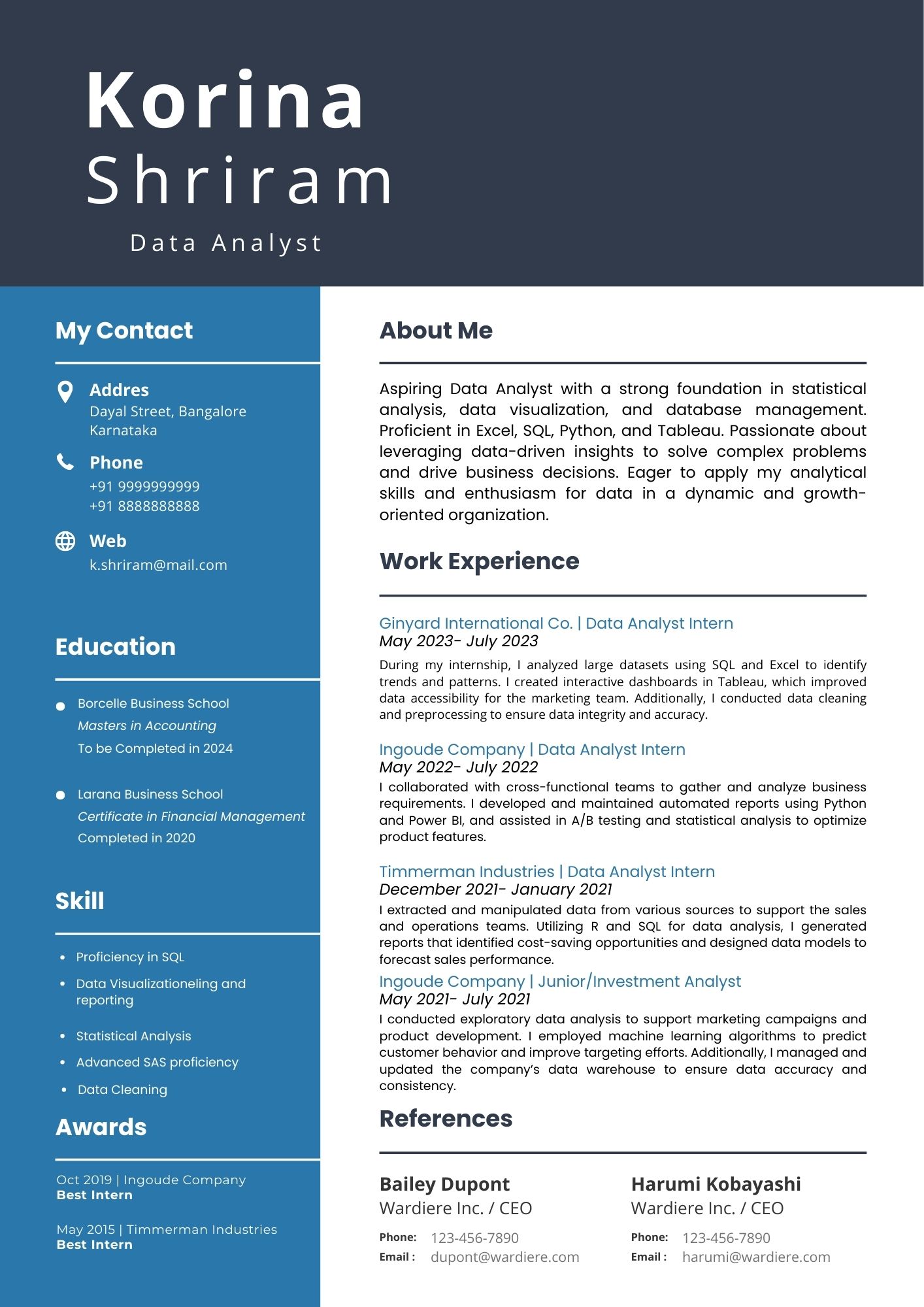
Here's an example of a data science resume that incorporates the key sections and best practices mentioned above:
John Doe Data Scientist Contact Information: [Email], [Phone Number], [LinkedIn Profile]
Summary/Objective Statement
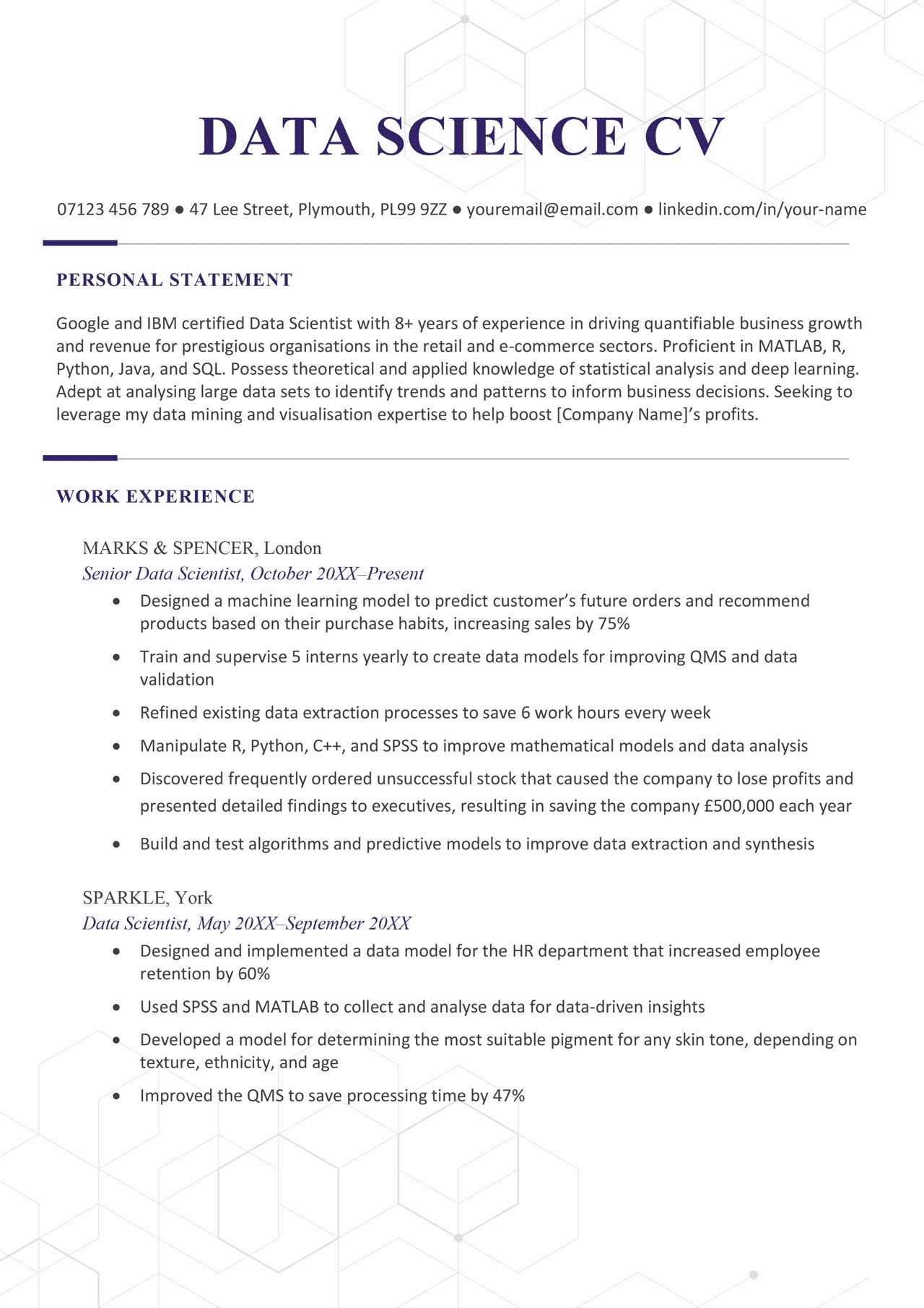
Highly motivated and experienced data scientist with a strong background in machine learning, data analysis, and data visualization. Proven track record of delivering high-impact projects and driving business growth through data-driven insights.
Education
- Master's in Data Science, Stanford University (2018)
- Ph.D. in Statistics, University of California, Berkeley (2015)
Work Experience
- Data Scientist, ABC Company (2020-Present)
- Developed and deployed machine learning models to improve predictive accuracy by 25%
- Designed and implemented data visualization dashboards to improve business decision-making
- Data Analyst, DEF Company (2018-2020)
- Analyzed and reported on sales trends and market share
- Developed and maintained data quality checks to improve data accuracy
Skills
- Programming languages: Python, R, SQL
- Data analysis tools: pandas, NumPy, Tableau
- Machine learning algorithms: scikit-learn, TensorFlow
Projects
- Project 1: Developed a machine learning model to predict customer churn using data from a telecom company. Achieved a 30% reduction in customer churn rate.
- Project 2: Designed and implemented a data visualization dashboard to improve business decision-making for a retail company.
Awards and Honors
- Winner of the 2020 Data Science Competition at Stanford University
- Recipient of the 2019 Data Science Award at DEF Company
![Building a Stand-out Data Scientist Resume [Ultimate Guide For 2026]](https://d25zcttzf44i59.cloudfront.net/data-scientist-intern-resume-example.png "Building a Stand-out Data Scientist Resume [Ultimate Guide For 2026]")