Understanding UK Trusts and Inheritance: A Comprehensive Guide
What are Trusts?Atrustis a way of managing assets (money, investments, land or buildings) for people. It allows individuals to transfer their assets to a trustee, who will manage them according to a set of rules and distribute them to beneficiaries.
Types of Trusts
- Revocable Trust: A trust that can be changed or terminated by the settlor during their lifetime.
- Irrevocable Trust: A trust that cannot be changed or terminated once it is set up.
- Living Trust: A trust that is created during a person's lifetime to manage their assets during their lifetime and after their death.
- Testamentary Trust: A trust created by a will to manage assets for beneficiaries after the settlor's death.
- Charitable Trust: A trust that is created for charitable purposes and cannot benefit any individual beneficiaries.
How are Trusts Taxed?
In the United Kingdom, trusts are taxed according to their residence and domicile status. Trusts can be classified as either a UK residence trust or a non-UK residence trust. UK residence trusts are taxed as part of the settlor's estate, while non-UK residence trusts are taxed separately as a separate trust.
UK residence trusts are subject to Inheritance Tax (IHT), a tax on the transfer of assets from one generation to the next. Non-UK residence trusts, on the other hand, are subject to income tax and capital gains tax, but are exempt from IHT.
Why Use Trusts for Inheritance Tax Planning?
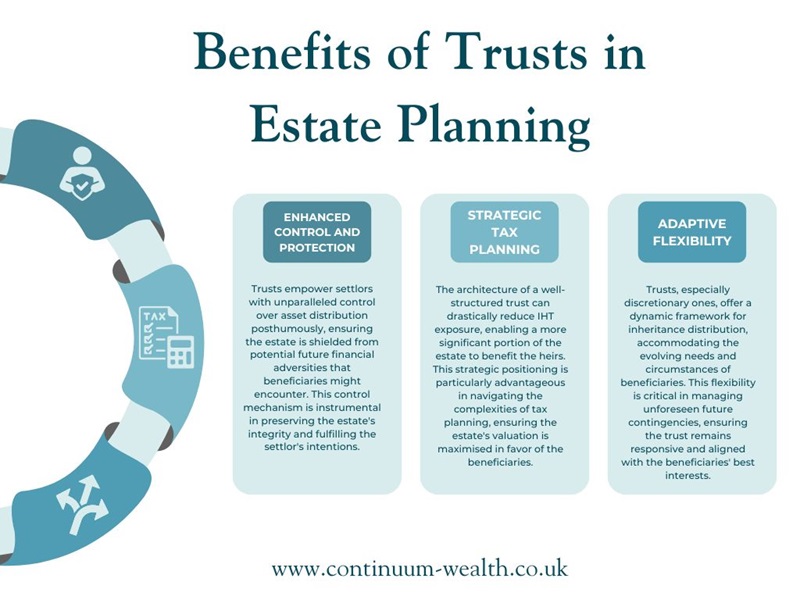
Trusts can be an effective way to plan for Inheritance Tax (IHT) minimization. By transferring assets to a trust, individuals can reduce their estate and potentially lower their IHT liability.
Trusts can also provide control and flexibility in how assets are managed and distributed. Beneficiaries can be appointed to manage the trust assets during their lifetime, ensuring that the assets are used in accordance with the settlor's wishes.
UK Trusts and Inheritance Tax: Interactions and Consequences

Trusts and Inheritance Tax can interact in complex ways. A trust can be created to benefit beneficiaries while minimizing IHT liability, but it can also have unexpected implications for the settlor and beneficiaries.
It's essential to understand the rules and regulations surrounding trusts and IHT to avoid unintended consequences.
Seeking Professional Advice on UK Trusts and Inheritance Tax
Considering the complexities of trusts and IHT, it's recommended to consult with a professional advisor to determine the most suitable options for your individual circumstances.
With the right guidance, you can ensure that your will is executed according to your wishes, and your estate is managed and distributed efficiently.
Taking Control of Your Estate with UK Trusts
By understanding the various types of trusts and how they can be used for IHT planning, you can take control of your estate and minimize the burden of Inheritance Tax.
With careful planning and expert advice, you can create a trust that meets your goals and provides peace of mind for you and your loved ones.
Conclusion
UK trusts and inheritance tax can be complex and confusing, but with the right guidance, you can navigate these waters and ensure that your estate is managed and distributed according to your wishes.
Don't let IHT dictate the distribution of your assets – take control with UK trusts and ensure a seamless transition for your loved ones.