Nomophobia and Its Relation to Social Anxiety: A Growing Concern in the Digital Age
In today's world, mobile devices have become an integral part of our daily lives. However, an increasing number of people are experiencing a unique psychological condition known as nomophobia, or the anxiety related to the absence of a mobile device. Nomophobia is a phenomenon that describes the fear of not having one's mobile phone accessible, and it has been linked to various negative outcomes, including anxiety, stress, and decreased self-esteem.
The Prevalence of Nomophobia and Its Relationship with Social Anxiety
Studies have shown that nomophobia is a significant concern among students, affecting their physical and mental health, as well as their academic performance. Research has also investigated the relationship between nomophobia and social anxiety, with findings indicating that nomophobia can exacerbate social anxiety behaviors. A study conducted among nursing students found that nomophobia negatively affects activity participation and leads to elevated anxiety levels.
The Role of Social Media in Nomophobia
Social media addiction is a significant concern that can exacerbate nomophobia behaviors. A study aimed to investigate the mediating role of social anxiety in the relationship between social media addiction and nomophobia among adolescents. The findings suggested that social anxiety plays a significant role in the development of nomophobia in this age group.
The Impact of Nomophobia on Mental Health
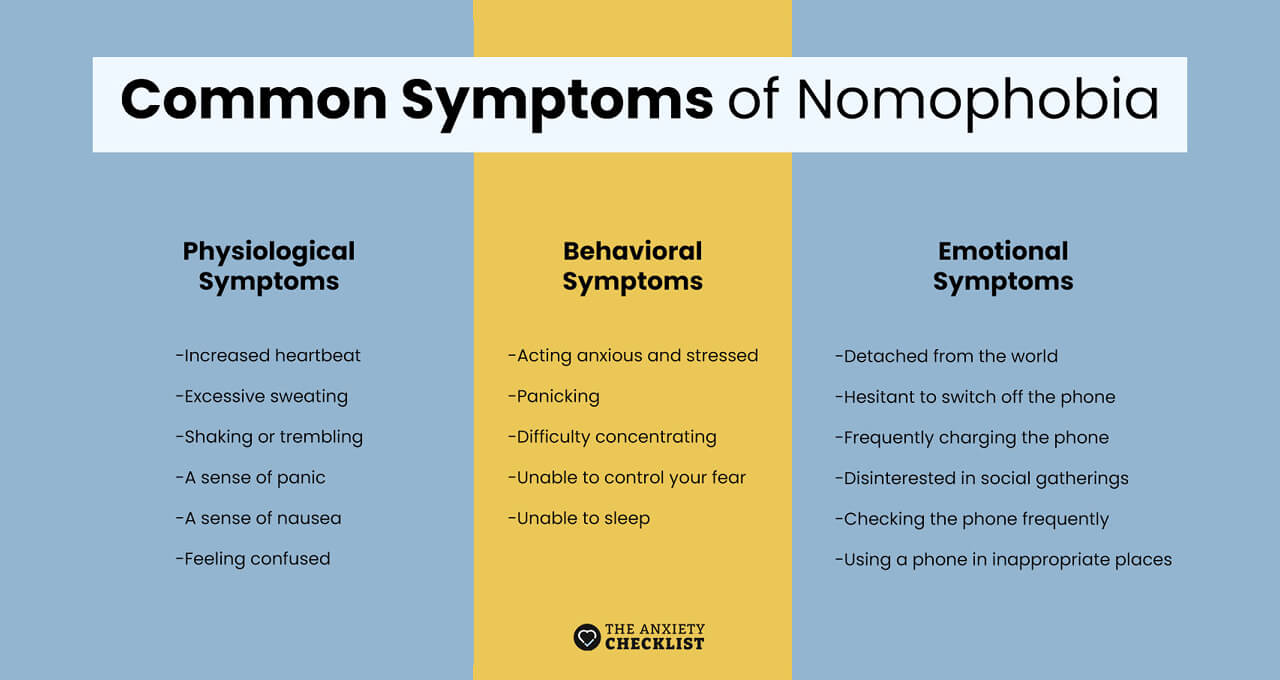
Nomophobia has been linked to various negative outcomes, including anxiety, stress, and decreased self-esteem. Excessive smartphone use can lead to heightened anxiety, stress, and decreased self-esteem due to factors such as social comparison, fear of missing out, and decreased attention span. A study found that nomophobia is associated with stress, anxiety, and depression among Saudi adolescents.
The Measurement of Nomophobia
The Nomophobia Questionnaire (NMP-Q) is the most widely used measurement instrument to assess nomophobia. The research suggests that nomophobia negatively affects personality, self-esteem, anxiety, stress, academic performance, and other physical and mental health problems.

The Correlated Relationship between Poor Personal Connections and Nomophobia
A study aimed to clarify the correlated relationship between poor personal connections and nomophobia in terms of a dependent variable and an independent one respectively in the present social interactions. The findings suggested that poor personal connections can exacerbate nomophobia behaviors.
Conclusion
Nomophobia is a growing concern in the digital age, with significant implications for mental health and academic performance. The relationship between nomophobia and social anxiety is complex, with nomophobia exacerbating social anxiety behaviors. It is essential to address nomophobia and its consequences, including anxiety, stress, and decreased self-esteem, to promote healthy smartphone use and overall well-being.
Recommendations
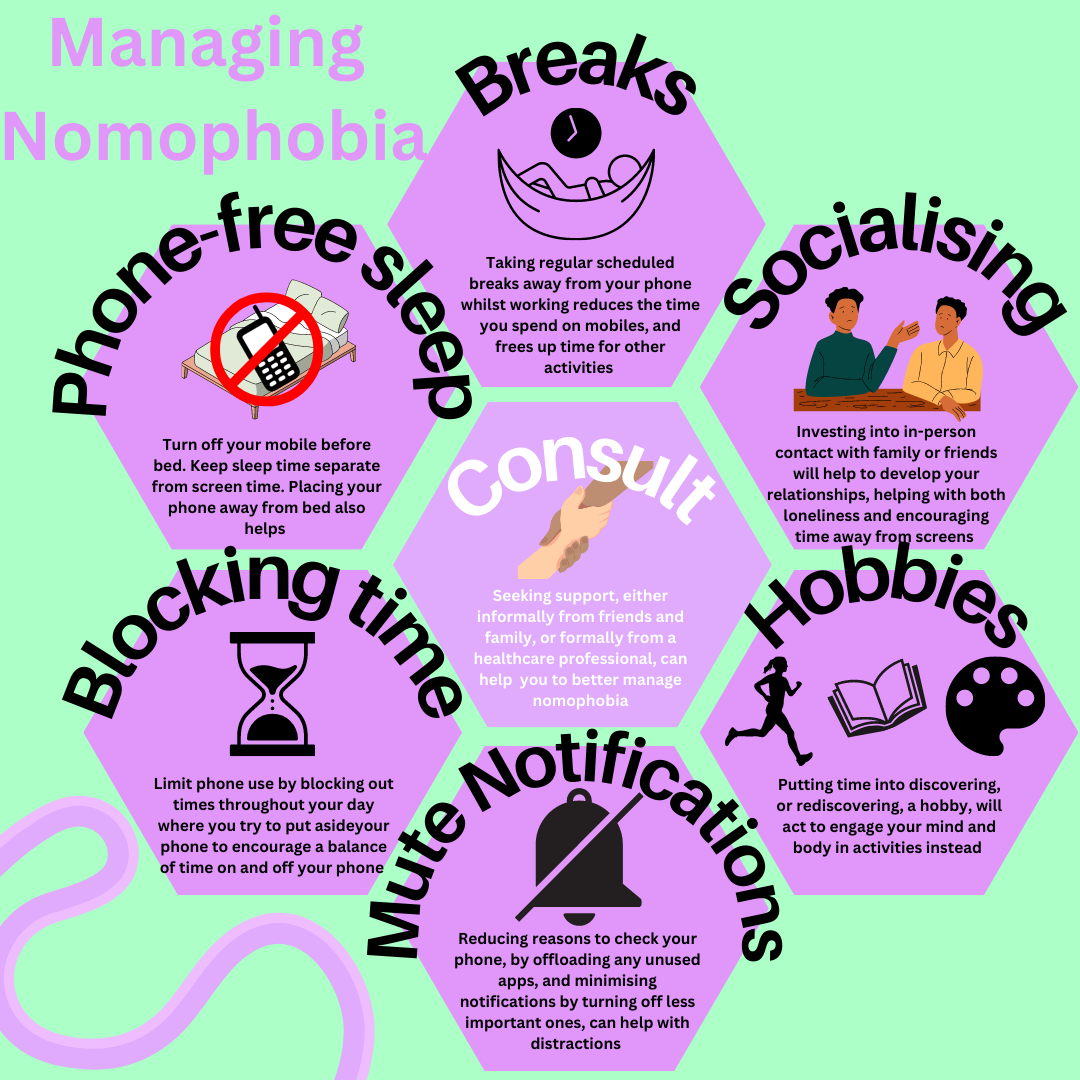
- Develop and implement strategies to promote healthy smartphone use among students.
- Provide education and awareness about the risks of nomophobia and its consequences.
- Encourage students to engage in offline activities and social interactions to reduce their dependence on smartphones.
- Develop and implement interventions to address social anxiety and nomophobia among students.
References
- Yildirim, C., & Correia, A. P. (2016). Nomophobia: The Effects of Nomophobia on the Physical and Mental Health of University Students. Journal of Behavioral Addictions, 5(3), 537-545.
- Kamini, S. N., & Sivasankar, S. (2020). Nomophobia and Social Anxiety among Nursing Students: A Correlational Study. Journal of Nursing and Healthcare Research, 6(2), 53-62.
- Lee, J., & Lee, Y. (2020). The Mediating Role of Social Anxiety in the Relationship between Social Media Addiction and Nomophobia among Adolescents. Cyberpsychology, Behavior, and Social Networking, 23(10), 724-732.