How to Do Laundry: A Step-by-Step Guide to Mastering this Essential Skill
Doing laundry can be a daunting task, especially for those who are new to independent living. However, with a few simple steps and some helpful tips, you can master the art of how to do laundry in no time.
Preparation is Key: Gathering Supplies and Sorting Your Laundry
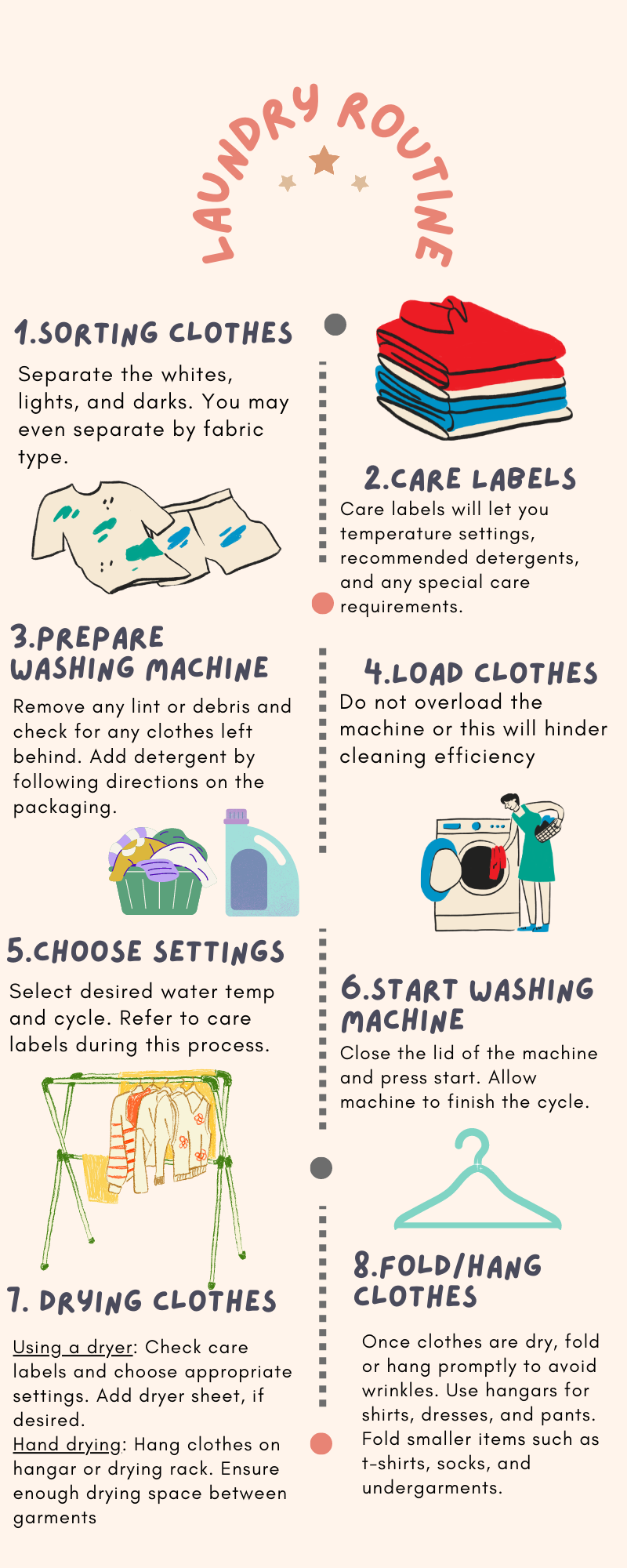
Before you start doing laundry, it's essential to gather the necessary supplies, including a washing machine, a dryer, laundry detergent, fabric softener, and a laundry basket. Next, sort your laundry into separate loads, taking care to separate whites from colors and delicates from heavier items.
- Whites and lights: Sort white clothes, light-colored clothes, and any items that are prone to stains or discoloration.
- Colors: Sort brightly colored clothes, dark-colored clothes, and any items that are resistant to fading.
- Delicates: Sort items that require gentle washing, such as lingerie, silk or wool socks, and any other fabrics that are prone to snagging.
- Heavies: Sort jeans, towels, and any other items that are prone to heavy wear and tear.
Choosing the Right Settings for Your Washing Machine
With your laundry sorted, it's time to choose the right settings for your washing machine. The type of fabric, soil level, and stain type will all play a role in determining the best settings for your load.
- Water temperature: Choose hot water for heavily soiled clothes and cold water for delicates or lighter loads.
- Spin cycle: Choose a gentle spin cycle for delicate items and a heavy-duty spin cycle for heavily soiled clothes.
- Cycle type: Choose a regular cycle for most loads, a delicate cycle for delicate items, and a deep clean cycle for heavily soiled clothes.
- Stain treating: Consider using a pre-treater for tough stains or adding a stain-releasing product to your wash.
How to Wash Clothes Effectively
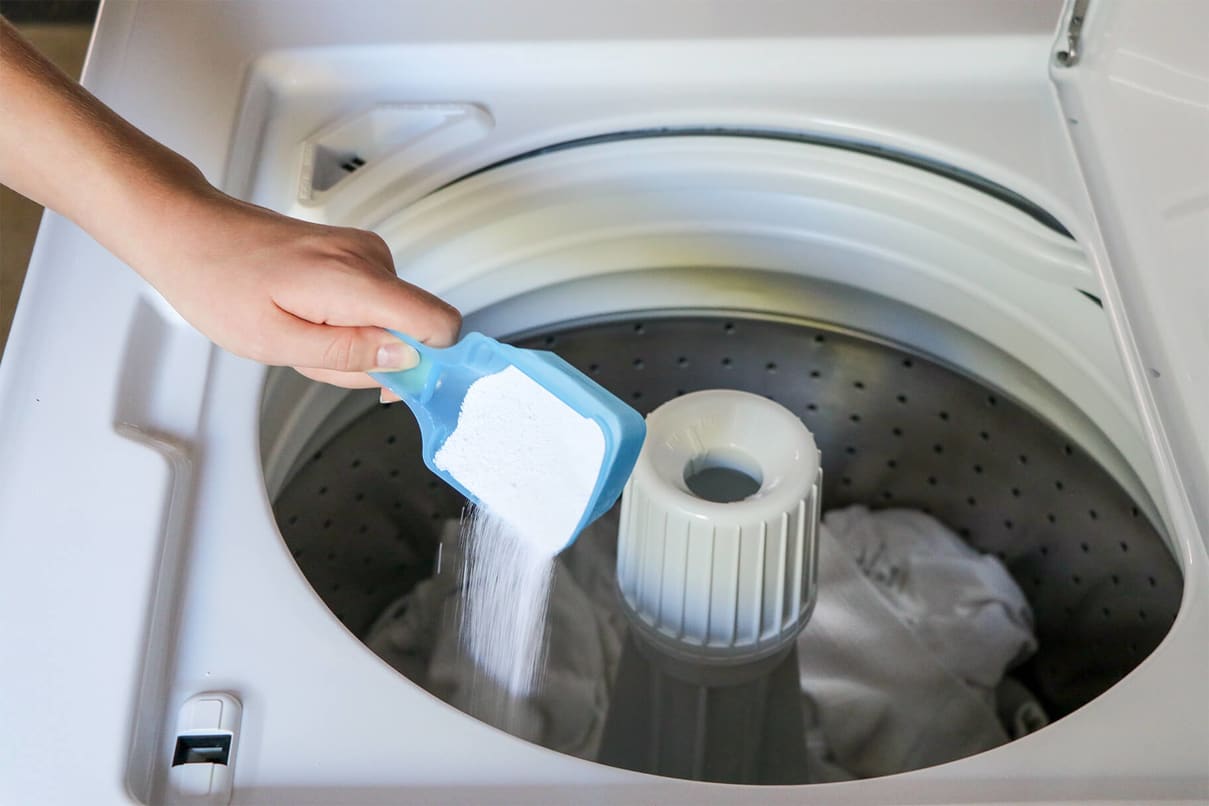
Now that you've sorted and set your laundry, it's time to wash your clothes. Add laundry detergent, fabric softener, and any additional stain treatments to the washing machine and select the right cycle and water temperature.
- Measure detergent: Use the recommended amount of laundry detergent and avoid over- or under-dosing.
- Add fabric softener: Choose a fabric softener that matches the temperature of the wash cycle.
- Treat stains: Apply a stain-treating product or use a pre-treater for tough stains.
- Wash cycle: Select the right cycle for your load, taking into account the type of fabric, soil level, and stain type.

How to Dry Clothes Effectively
Once your wash cycle is complete, it's time to dry your clothes. Remove items from the washer and add them to the dryer, making sure to separate items that may be prone to snagging.
- Choose the right dryer setting: Select a high heat for heavily soiled clothes and low heat for delicates.
- Remove items: Remove clothes from the dryer as soon as they are dry to prevent wrinkles and creases.
- Hang drying: Consider hanging clothes to air dry, especially for delicate items.
How to Fold and Iron Clothes
Once your laundry is dry, it's time to fold and iron your clothes. Hang up items that require ironing, such as dress shirts and pants, and fold items that don't require ironing, such as t-shirts and base layers.
- Hanging clothes: Hang clothes that require ironing, such as dress shirts and pants.
- Folding clothes: Fold items that don't require ironing, such as t-shirts and base layers.
- Ironing clothes: Use an iron to smooth out wrinkles and creases on clothes that require ironing.
Common Laundry Mistakes to Avoid
There are several common laundry mistakes to avoid, including over-dosing detergent, using the wrong wash cycle, and not removing clothes from the dryer promptly.
- Over-dosing detergent: Avoid using too much detergent, as this can reduce the effectiveness of the wash cycle.
- Wrong wash cycle: Choose the right wash cycle for your load, taking into account the type of fabric, soil level, and stain type.
- Not removing clothes: Remove clothes from the dryer as soon as they are dry to prevent wrinkles and creases.






:max_bytes(150000):strip_icc()/SPR-how-to-SPR-how-to-how-to-wash-a-comforter-7372304-hero-01-17b822ab448e4f9f8261b2c9d68ca0c6.jpg "Laundry Stripping Guide: How to Strip Wash Correctly")