The Best Way to Meditate: A Comprehensive Guide for Beginners
Meditation is an ancient practice that has been around for thousands of years, but it's still a mystery to many of us. With the numerous types of meditation out there, it's easy to get overwhelmed and wonder how to meditate properly.
Why Meditate?
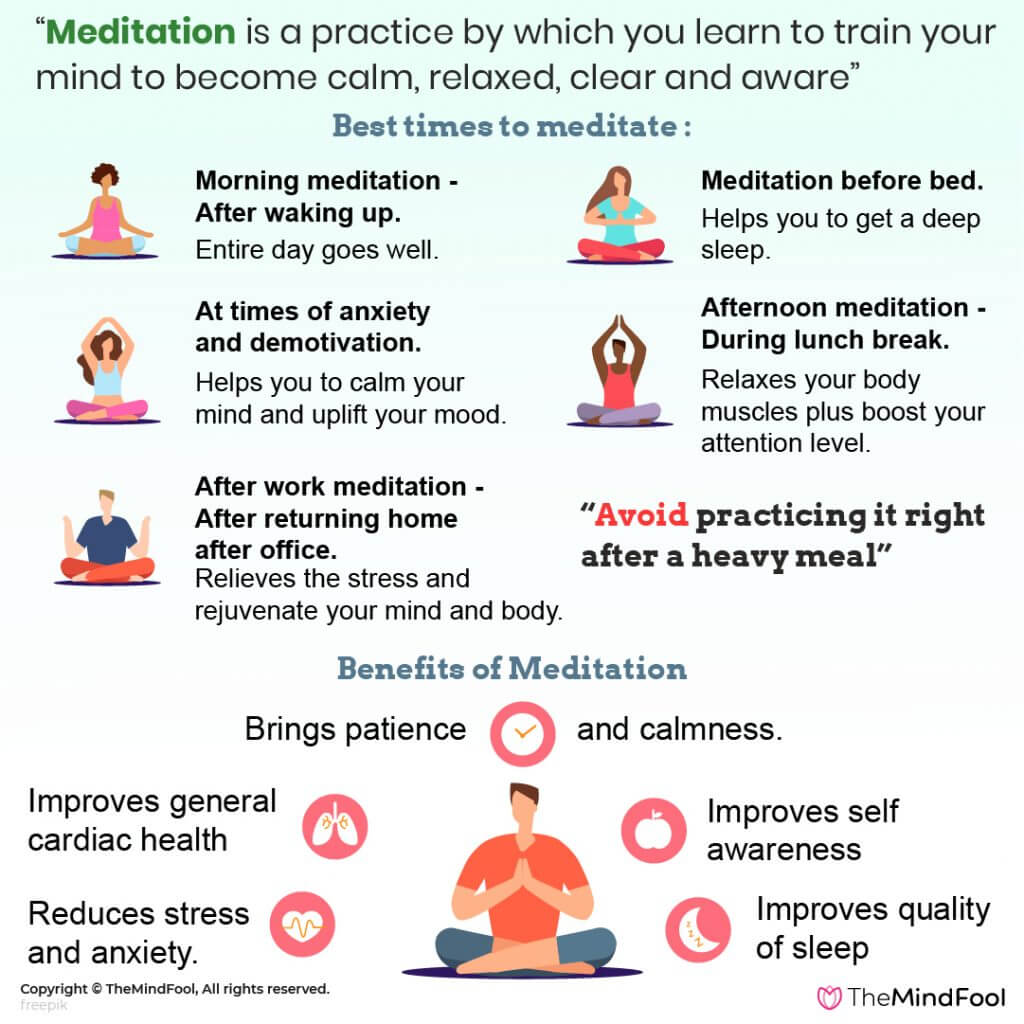
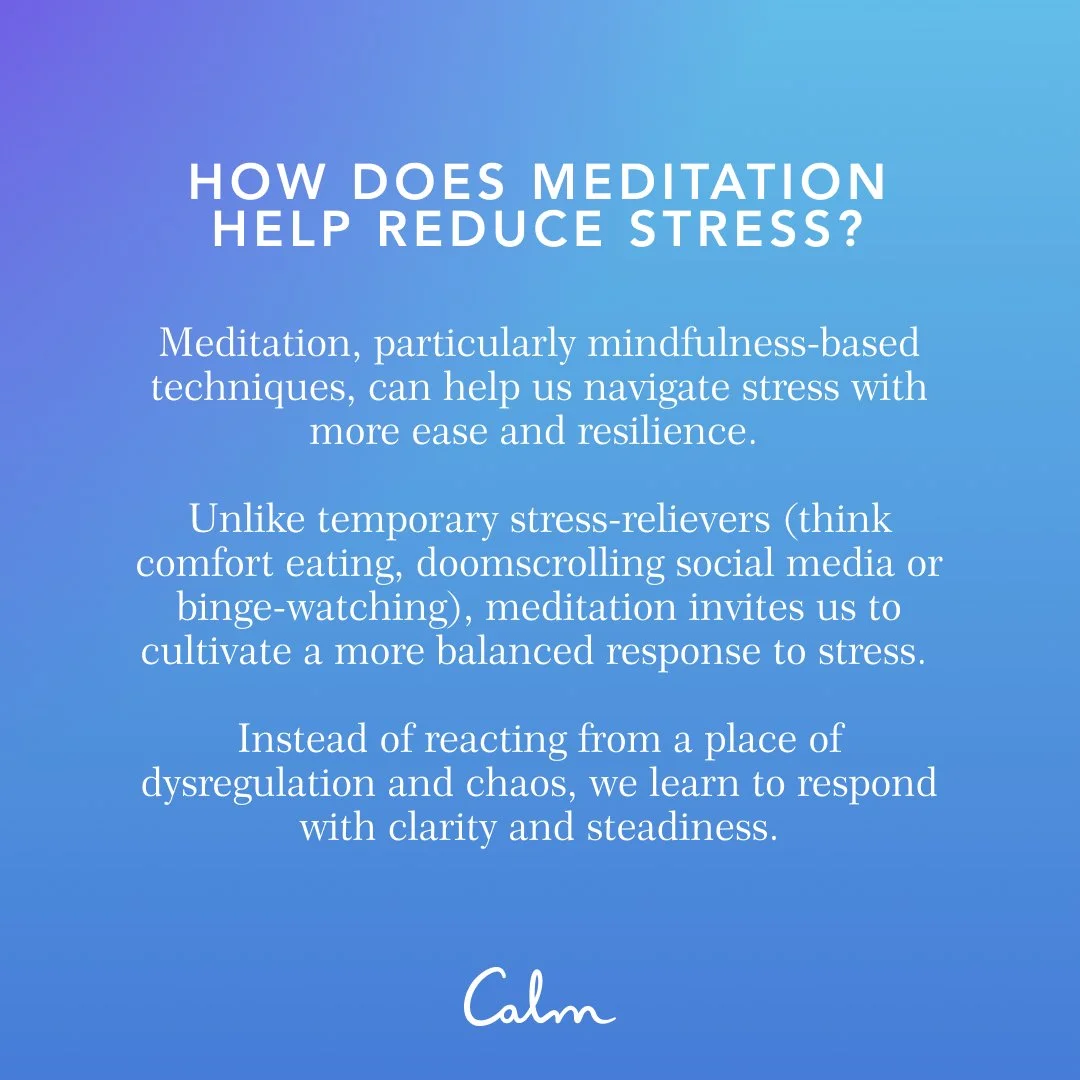
Meditation is a powerful tool that can have a profound impact on both the mind and body. Regular meditation practice has been shown to reduce stress, improve focus, and even change the structure of the brain. It can also improve sleep quality, boost the immune system, and increase feelings of happiness and well-being.
The Benefits of Meditation
- Reduces stress and anxiety
- Improves focus and concentration
- Enhances self-awareness and emotional regulation
- Boosts mood and reduces symptoms of depression
- Improves sleep quality
- Strengthens the immune system
- Increases feelings of happiness and well-being
Types of Meditation
- Mindfulness Meditation: Focus on the present moment, often through paying attention to the breath or a physical sensation.
- Guided Meditation: Use a guided recording to lead you through a meditation practice, often with a specific theme or focus.
- Transcendental Meditation: Use a mantra to quiet the mind and access a deeper state of consciousness.
- Loving-Kindness Meditation: Focus on cultivating compassion and kindness towards oneself and others.
- Body Scan Meditation: Bring awareness to different parts of the body, often to release tension and promote relaxation.
- Visualization Meditation: Use visualization techniques to create a peaceful and relaxing atmosphere.
How to Meditate Properly
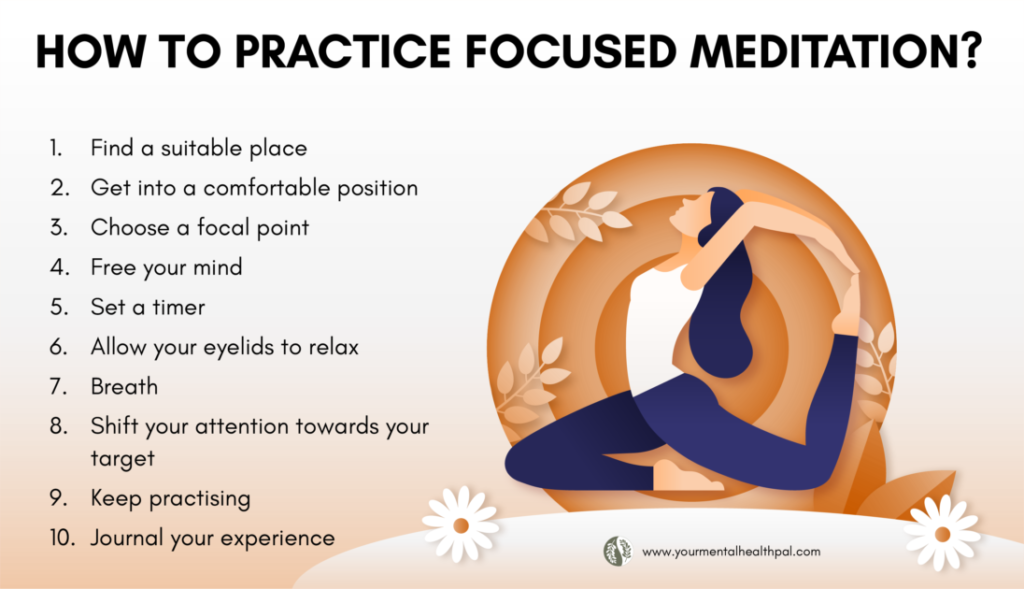
- Find a quiet and comfortable space: Identify a quiet and comfortable space where you can sit and meditate without distractions.
- Choose a meditation technique: Experiment with different types of meditation to find what works best for you.
- Set a regular practice: Commit to a daily meditation practice, even if it's just a few minutes a day.
- Use guided meditations: Utilize guided meditations to get started and stay on track.
- Be patient and consistent: Meditation is a practice that takes time and patience to develop. Don't get discouraged if you struggle at first.
Practical Tips for Meditation

- Start small: Begin with short meditation sessions and gradually increase the duration as you become more comfortable with the practice.
- Focus on your breath: Pay attention to your breath, which can help calm the mind and bring you back to the present moment.
- Be gentle with yourself: Remember that meditation is a practice, and it's okay if your mind wanders. Gently bring your attention back to the present moment.
- Use a meditation app: Utilize apps like Headspace or Calm to guide you through meditation practices and track your progress.
Conclusion
The best way to meditate is a personal journey that requires patience, consistency, and an open mind. By understanding different meditation techniques, establishing a regular routine, and using practical tips, anyone can experience the profound benefits of meditation. Remember to start small, stay consistent, and be gentle with yourself as you navigate the world of meditation. With time and practice, you can become a skilled meditator and live a healthier, happier life.
Additional Resources
Mindfulness Meditation Hub
Mindfulness Meditation Hub is a comprehensive resource for meditation and mindfulness practices. They offer guided meditations, articles, and courses to help you get started with meditation and deepen your practice.
Muse Headband
The Muse headband is a wearable device that uses EEG technology to track your brain activity and provide real-time feedback during meditation. It's a powerful tool to help you optimize your meditation practice and track progress.
By following these tips and resources, you'll be well on your way to meditating properly and experiencing the many benefits of this ancient practice.