Dealing with Digital Fatigue in Adults: Strategies for Mental and Physical Well-being
Are you constantly feeling drained, exhausted, or mentally fatigued after spending too much time in front of digital screens? If so, you're not alone. In today's increasingly connected world, digital fatigue has become a real challenge for many adults.
What is Digital Fatigue?
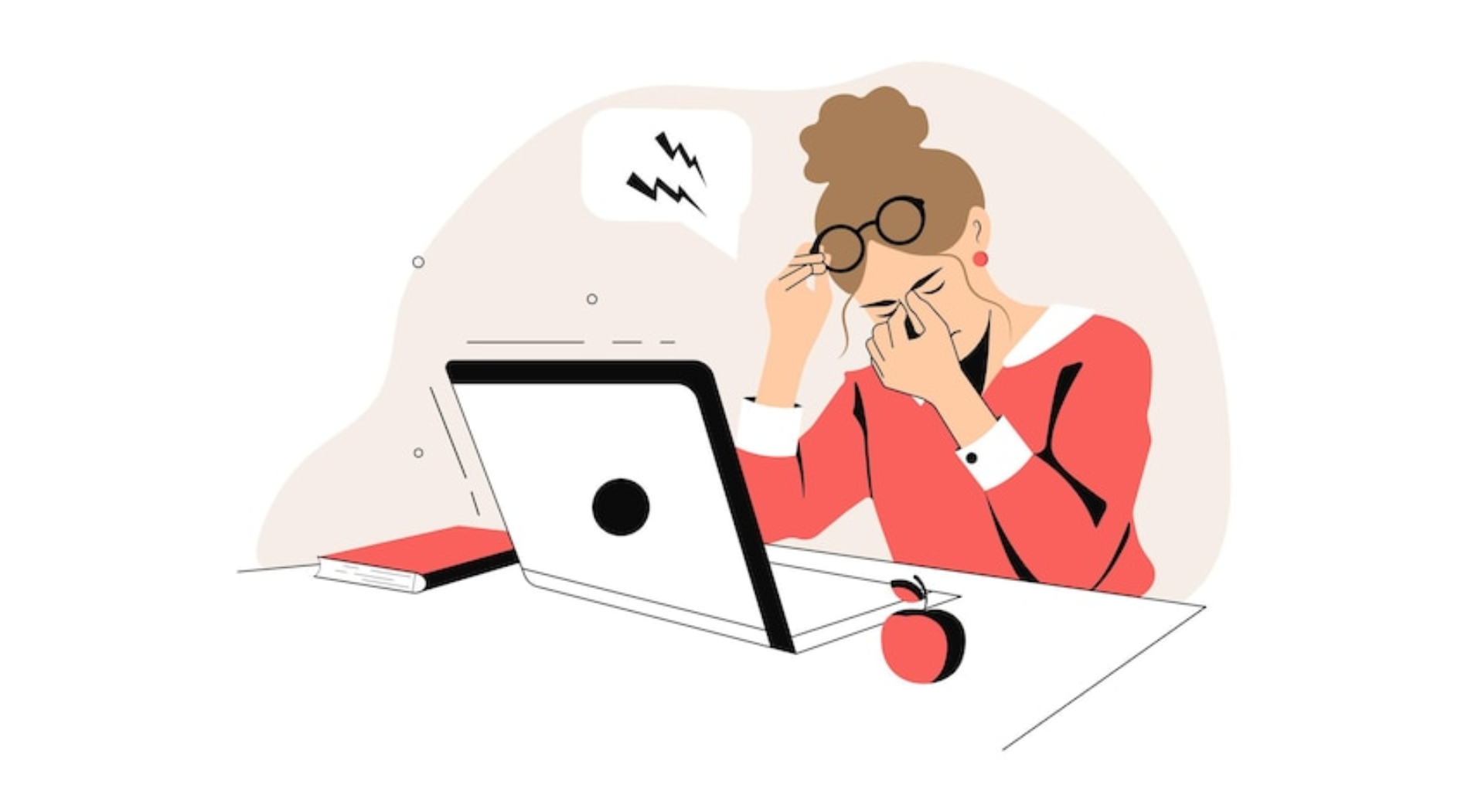
Digital fatigue is a condition characterized by physical and mental exhaustion linked to excessive exposure to digital technologies, including screens, computers, and other digital devices. It occurs when an individual makes intensive use of technological tools in their work or personal life, leading to a range of negative consequences, including decreased productivity, increased stress levels, and poor mental health.
Causes of Digital Fatigue
- Information Overload: The constant stream of notifications, social media updates, and emails can overwhelm our cognitive processing capacity, leading to mental fatigue and decision paralysis.
- Cognitive Overload: The demands of constant digital engagement, including multitasking and divided attention, can exacerbate mental fatigue and reduce productivity.
- Social Media Fatigue: The pressure to present a perfect online image, coupled with the constant stream of information and notifications, can contribute to feelings of anxiety, stress, and burnout.
Recognizing Symptoms of Digital Fatigue
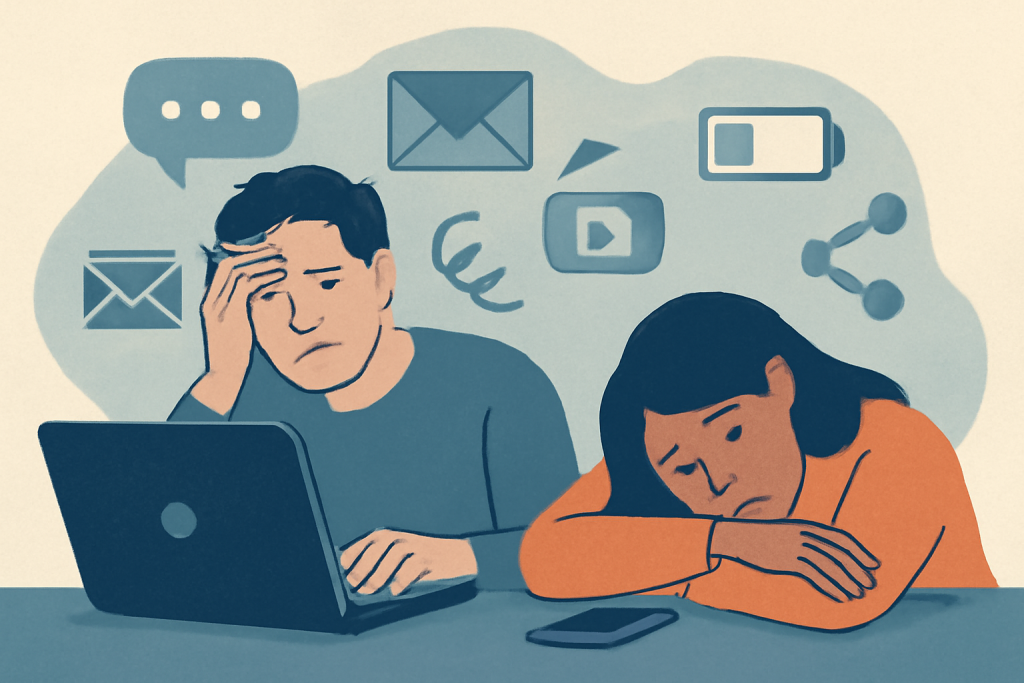
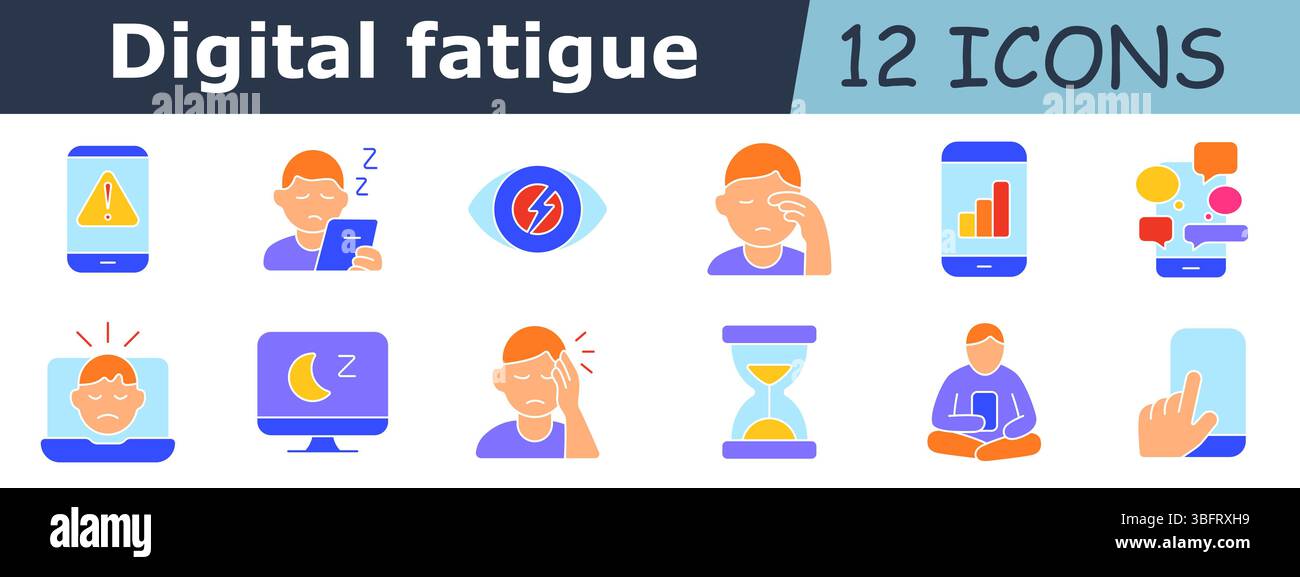
- Mental Fatigue: Feeling tired, drained, or mentally exhausted after engaging with digital devices.
- Decreased Productivity: Difficulty completing tasks, decreased focus, or decreased motivation.
- Sleep Disturbances: Difficulty falling asleep or staying asleep due to the stimulating effects of digital devices.
- Headaches and Eye Strain: Prolonged screen time can lead to headaches, eye strain, and blurred vision.
Strategies for Dealing with Digital Fatigue
To combat digital fatigue, consider the following strategies:
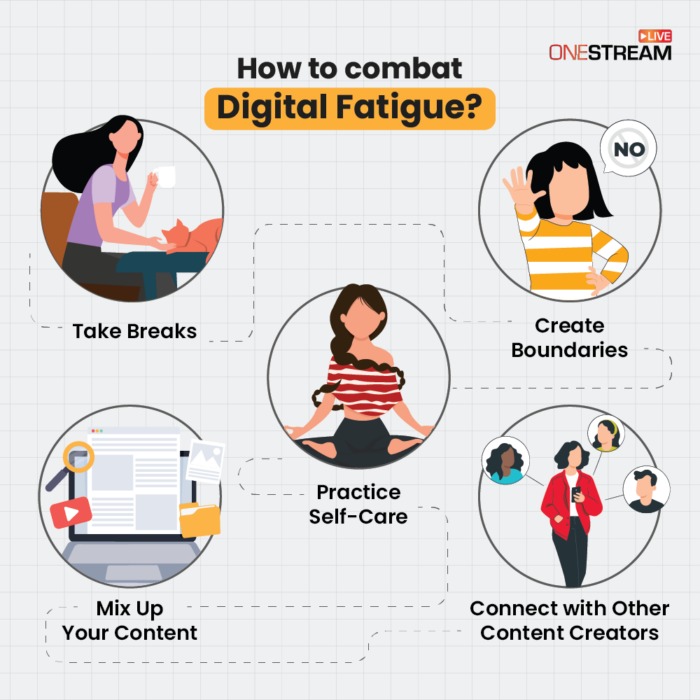
- Set Boundaries: Establish rules for digital use, such as not checking emails or social media during non-work hours or taking regular breaks to rest your eyes and mind.
- Implement Digital Detox: Regularly disconnect from digital devices to reset your brain and reduce exposure to stimulating information.
- Practice Mindful Tech Use: Be intentional about your digital engagement, using tools and apps to monitor and limit screen time, and use digital devices in a way that supports your mental health and well-being.
- Prioritize Sleep and Exercise: Regularly engage in physical activity and maintain a consistent sleep schedule to reduce stress and improve mental health.
- Seek Support:reach out to friends, family, or mental health professionals if you're experiencing chronic digital fatigue or related mental health concerns.
Conclusion
Dealing with digital fatigue in adults requires a multi-faceted approach that addresses the root causes of this condition, including information overload, cognitive overload, and social media fatigue. By implementing strategies such as setting boundaries, implementing digital detox, practicing mindful tech use, prioritizing sleep and exercise, and seeking support, adults can reduce the negative consequences of digital fatigue and maintain their mental and physical well-being in a rapidly changing digital world.