Mastering Python Type Checking: A Comprehensive Guide
Understanding the Importance of Type Checking in Python
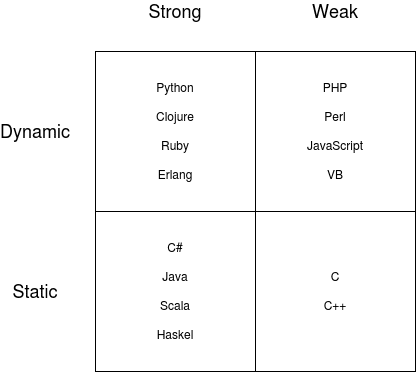
Python is a dynamically-typed language, which means that variable types are determined at runtime rather than at compile-time. While this flexibility is one of Python's greatest strengths, it can also lead to hard-to-debug issues when incorrect datatypes are passed around in a program. This is where type checking comes in – a crucial feature that helps mitigate these problems by allowing developers to verify that variables and parameters conform to specific types.How to Learn Python Type Checking
In this comprehensive guide, you'll learn about the fundamental concepts of type checking in Python, how to use type checking features, common practices, and best practices. By the end of this tutorial, you'll be well-equipped to incorporate type checking into your Python development workflow.What is Type Checking in Python?
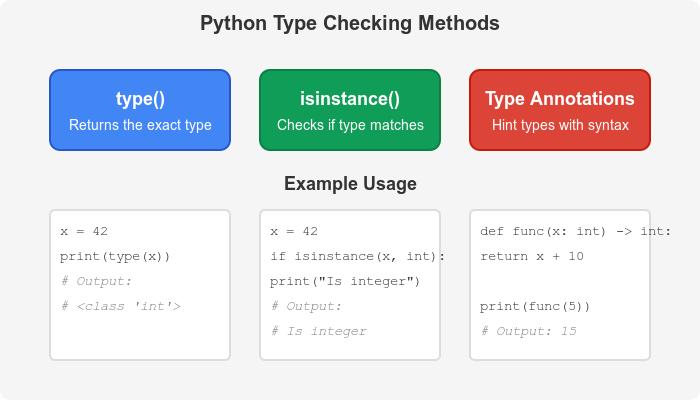
Python type checking is the process of verifying that variables and variables in a program have a specific type or set of types. This is not to be confused with dynamic typing, where the type of a variable is determined at runtime, not during compilation. While Python is dynamically typed, you can add optional static typing to your code using type hints, which enable tools like "mypy" to perform static type checking.Using Built-in Type Checking Functions